Coatings and treatments for fasteners
Stud bolts, bolts and screws purchased from us can be supplied already treated and coated: heat, surface and protective treatments are carried out by specialised partners and checked in our laboratory. Simply specify them in your order, together with the parts.
What happens to your order
The part comes from our warehouse, if it is in stock, or from one of the more than 200 production units we work with: cold heading and hot forging, thread rolling, turning, milling. It then undergoes heat treatment, which gives it hardness and mechanical strength, and receives a coating, which protects it against corrosion, wear and galling. Every batch goes through our laboratory before it ships.
We serve the petrochemical, automotive, aerospace, mechanical engineering, energy, railway and shipbuilding industries, including with low-environmental-impact solutions.
| Family | Treatments |
|---|---|
| PTFE coating | Xylan® and PTFE polymer coatings |
| Electroless nickel | Niploy®, Cheniflon® |
| Protective | Hot-dip galvanizing (HDG), black oxide, dry / oiled phosphating |
| Electroplated | Zinc, zinc-nickel, nickel, chrome and silver plating |
| Zinc flake | Geomet®, Delta-protekt, Zintek, ZEC® 888 |
| Overlays | HVOF, PTAW |
| Surface | Nitriding, Kolsterising® (S3P), PLASOX® |
| Thread lockers | Precote®, Promoblock 120/Ht, Promofren/360 |
| Heat treatment | Hardening and tempering, quenching and tempering, solution annealing, ageing, stress relieving |
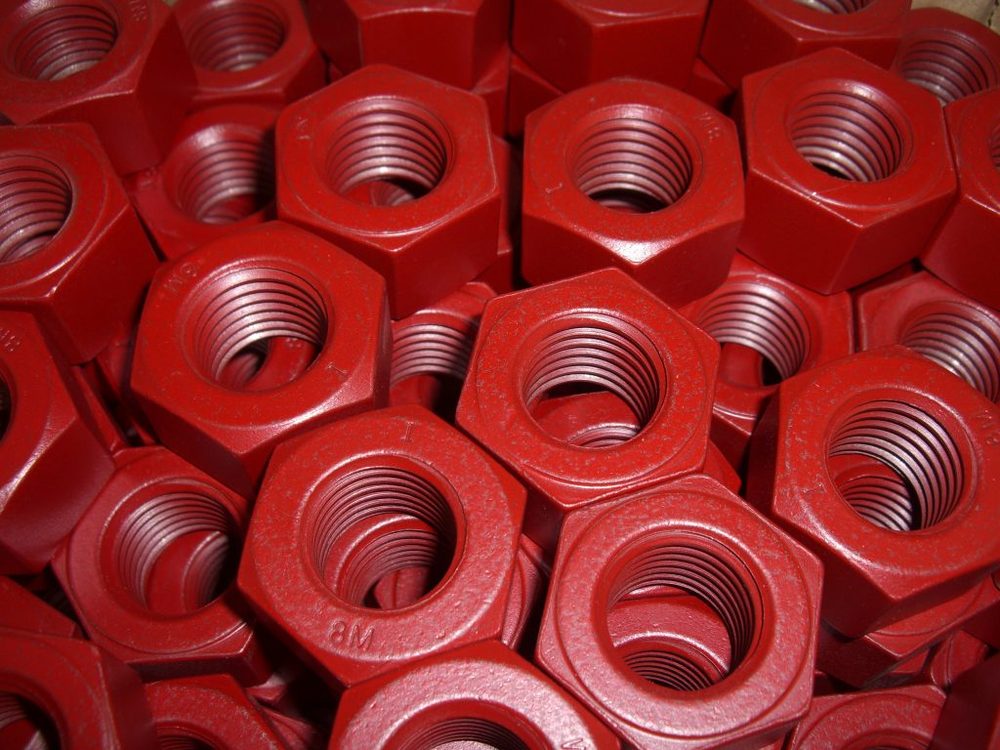
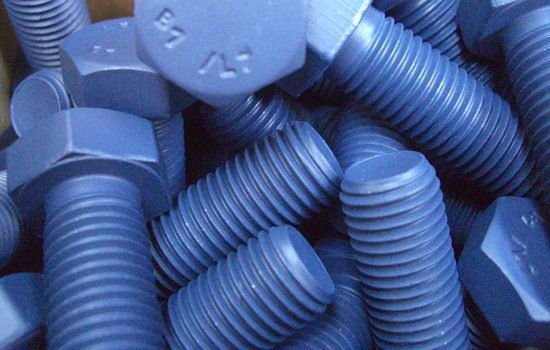
Xylan® and polymer coatings
PTFE-based polymer coatings, including the well-known Xylan® (a registered trademark of Whitford). They protect against corrosion, reduce friction and prevent galling: the bolt lasts longer and can be removed without damage.
| Property | Value |
|---|---|
| Typical thickness | 25 – 35 microns |
| Operating temperature | from −60 °C to +220 °C |
| Formulation | customisable |
- Corrosion resistance, ideal for fasteners in carbon and alloy steels
- Less friction and no galling, especially useful on stainless steels
- Fastenings in corrosive environments, offshore and chemical plants, oil & gas, automotive, aerospace
Niploy® and Cheniflon®
Two anti-wear, anti-corrosion and self-lubricating coatings for the food, chemical and energy industries.
Niploy®
Electroless nickel plating (ASTM B733): high corrosion resistance, very good surface hardness and uniform deposition even on complex geometries. It is suitable for mechanical components, valves and pumps.
Cheniflon®
A metal-polymer coating: electroless nickel plating with PTFE particles. The surface is slippery and self-lubricating, resistant to wear and corrosion, with higher performance than the Xylan® family. Typical thickness 25 – 30 microns, from −190 °C to +200 °C.
For bushings, valves and pumps in energy plants, for the food industry, where moisture and corrosive substances are present, for the chemical industry and for mechanical components, where less friction and a longer service life are needed.
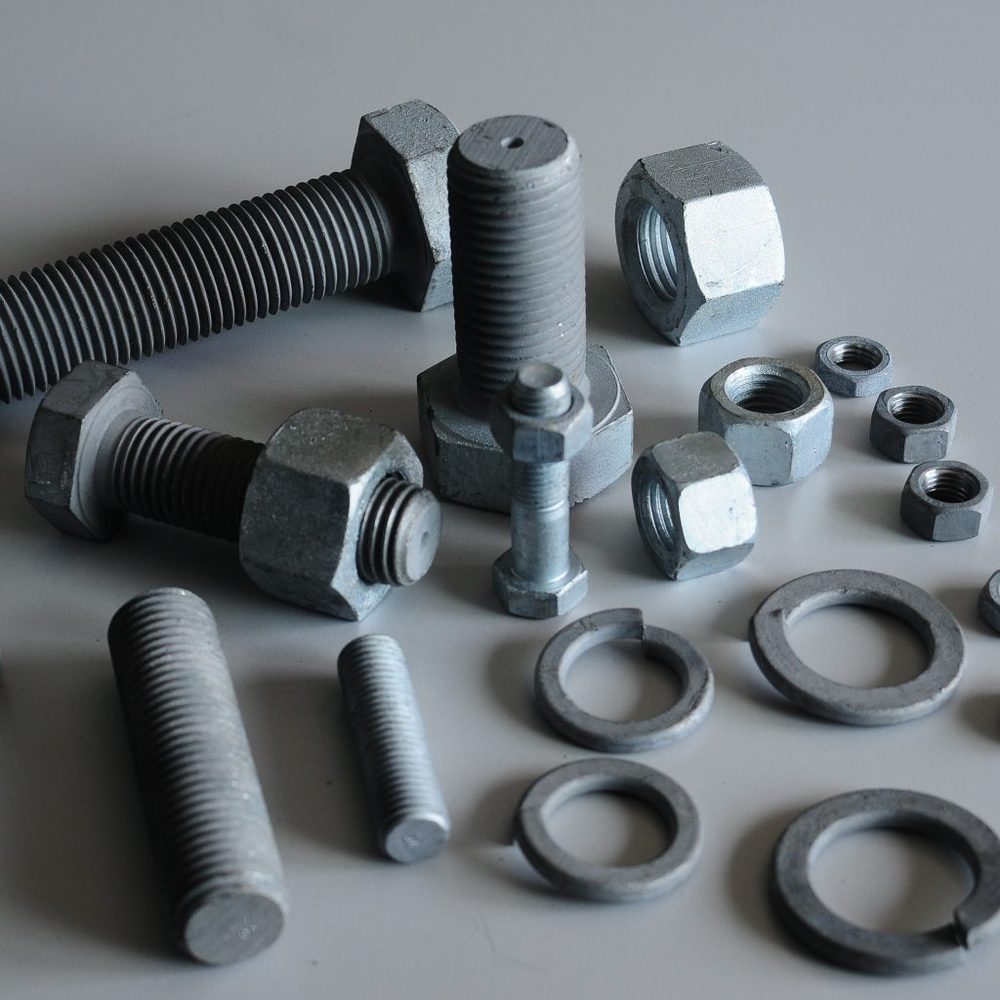
Hot-dip galvanizing (HDG)
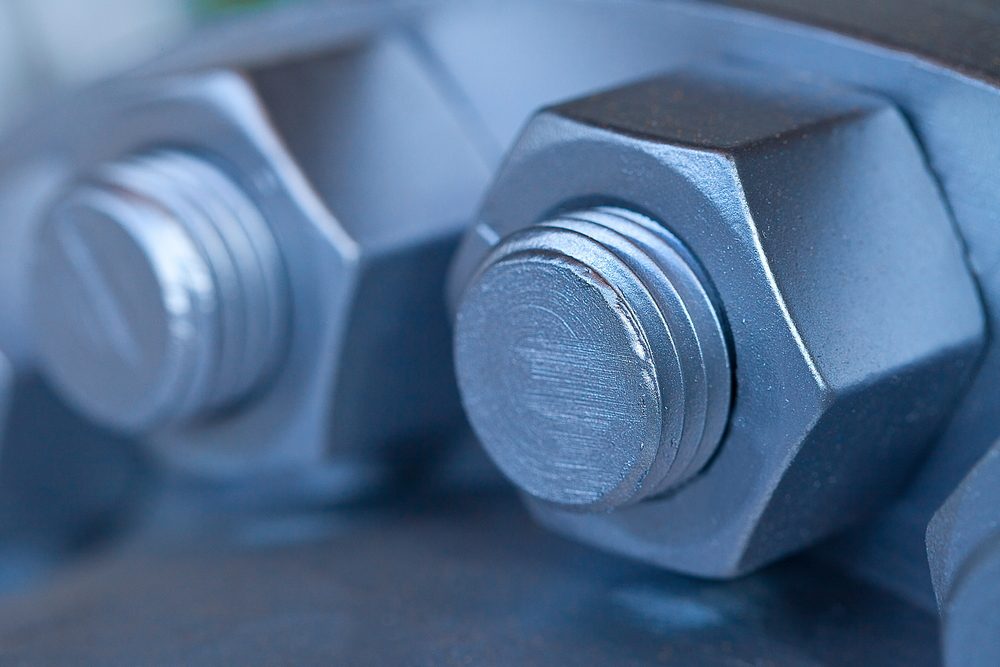
Hot-dip galvanizing of screws and stud bolts of all sizes, to ASTM A153 / F2329 and UNI EN ISO 10684, with the thickness guaranteed by the standard. There are no lumps or black spots, and a quality check ensures a perfect screw-nut fit without play.
- Screws and stud bolts with nominal thread plus the galvanizing thickness, matched with an oversized, re-tapped nut
- Screws and stud bolts with undersized thread, which return to the nominal diameter after galvanizing, matched with a re-tapped nut
The protective finishes also include black oxide and dry or oiled phosphating.
Geomet® and zinc flake coatings
Geomet®
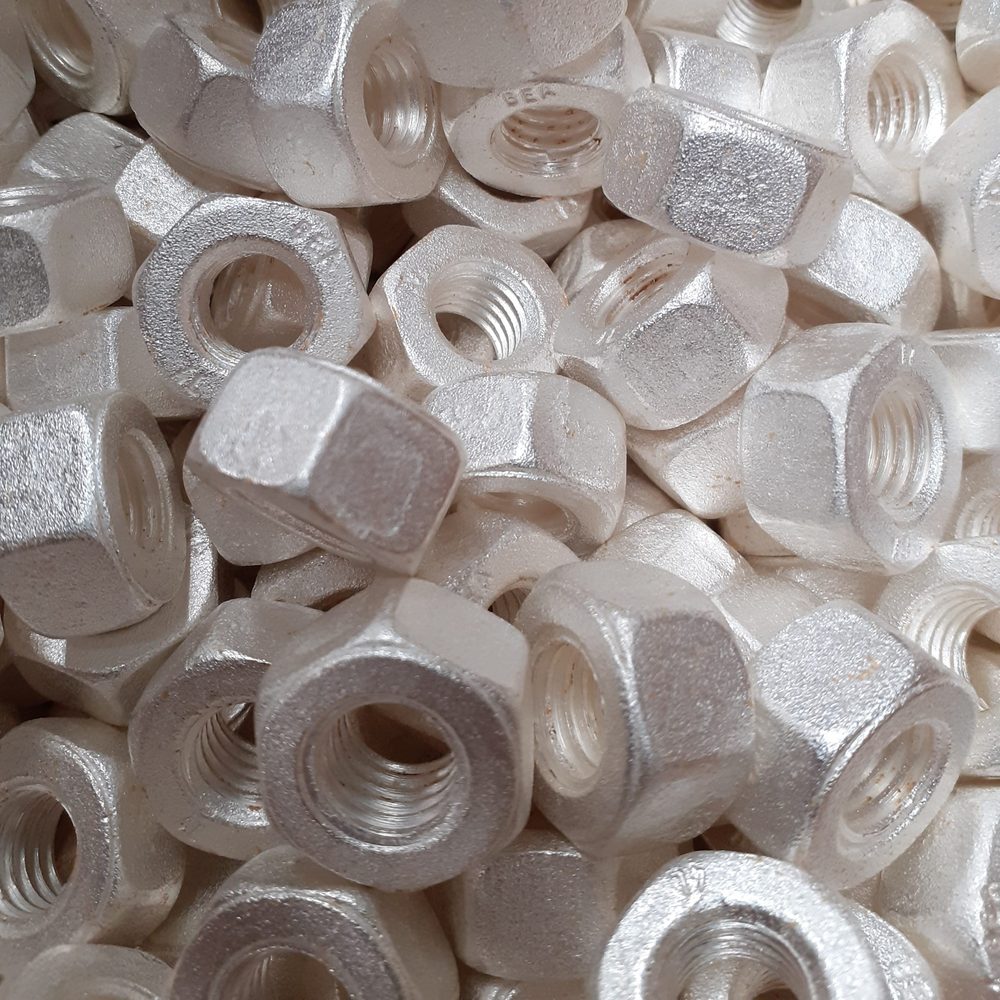
It is a non-electrolytic zinc and aluminium flake coating, free of hexavalent chromium and REACH-compliant. The process requires no electric current: lower consumption and a smaller environmental impact. It is used for fasteners, washers, springs and complex components exposed to moisture and salt: automotive, construction, marine. Delta-protekt and Zintek belong to the same family.
ZEC® 888 Zinc Protector
It is a chromium-free finish, an alternative to chromate conversion coating, for electroplated zinc, zamak and zinc flake: it withstands up to 1000 hours of salt spray, is self-healing, transparent and only 1 – 2 microns thick, keeps the friction coefficient constant and does not clog socket recesses.
Zinc, zinc-nickel, nickel and silver plating
Zinc electroplating (ASTM B633), zinc-nickel, nickel plating, chrome plating and silver plating, chosen according to the application. With thicker coatings the threads are re-chased, so that screw and nut mate correctly.
HVOF and PTAW
HVOF · High Velocity Oxygen Fuel
The jet of oxygen and fuel sprays the material at high velocity, forming a dense and highly adherent coating. The result is greater hardness, higher resistance to wear, fatigue and corrosion in marine and chemical environments, and less friction and galling. It is applied to alloy steels, stainless steels and special alloys and is better suited to large overlay areas and medium to large parts.
PTAW · Plasma Transferred Arc Welding
Metal powders are melted with a plasma arc: it is suitable for small to medium parts and critical areas, with a controlled deposit of a few millimetres that can be machined to precise tolerances. It is widely used on process valves; where HVOF and PTAW are not cost-effective, fully machined Stellite bushings are used.
Kolsterising® and S3P
It is a surface hardening process for austenitic stainless steels, nickel alloys and cobalt-chromium alloys: carbon and nitrogen diffuse into the material at low temperature, without chromium precipitation. Surface hardness rises up to 900 – 1300 HV0.05 while corrosion resistance is maintained.
- Dimensional and colour stability, no delamination or embrittlement
- Paramagnetic properties unchanged in austenitic steels
- Resistance to wear, abrasion and cavitation: pumps, valves, fittings, fastenings that are easy to remove, marine environments
- S3P A® and Kolsterising® for austenitic steels and nickel alloys; S3P M for martensitic and PH steels (17-4 PH, 13-8 Mo)
Nitriding and PLASOX®
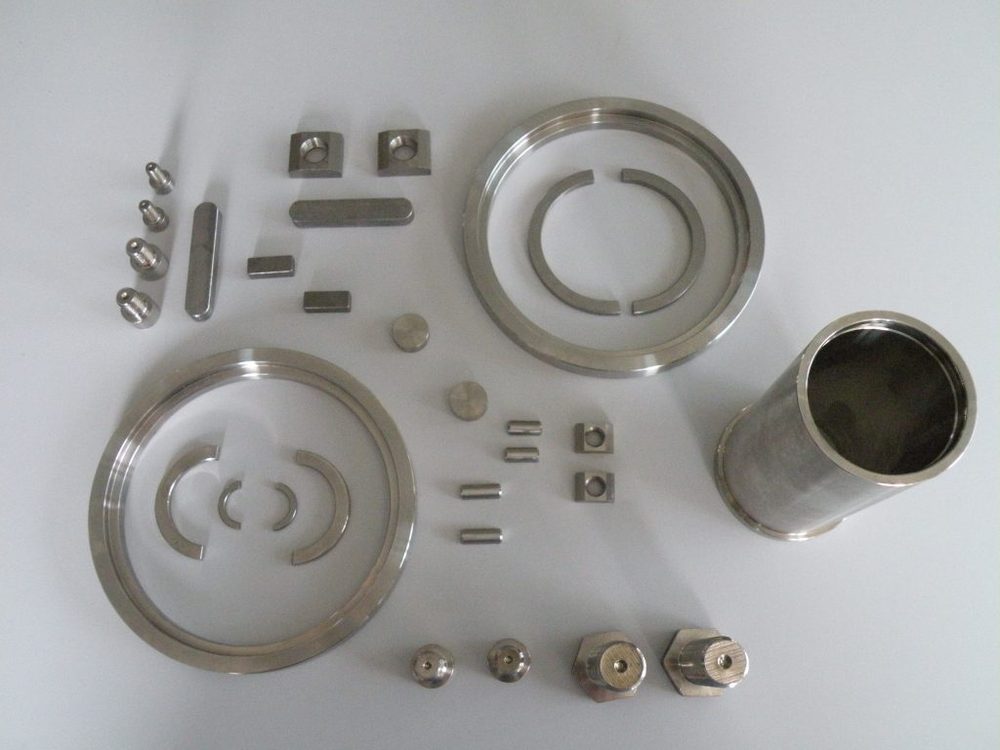
Nitriding, in a salt bath or by ion plasma, enriches the surface with nitrogen: hardness and resistance to wear and fatigue increase and friction decreases, without significant dimensional changes. PLASOX® combines plasma nitriding with a final oxidation that adds corrosion protection and leaves smooth surfaces without further finishing. Alternatives also include ARCOR®.
Precote® and sealants
These are pre-applied coatings that lock and seal the thread without liquid sealants, with an identification colour: high-strength locking, medium-strength locking, thread-locking and sealing for tightness at first assembly. The thread-locking coating is applied as a patch, from 90° to 120°, or over 360° when fluid tightness is also required. Promoblock 120/Ht and Promofren/360 are also available.
From the blank to the finished part
Forging
Cold heading and hot forging.
Machining
Thread rolling, turning, milling.
Heat treatments
Hardening and tempering, quenching and tempering, solution annealing, ageing, stress relieving.
What is Xylan®?
It is a PTFE-based polymer coating (a registered trademark of Whitford), 25 – 35 microns thick, for service from −60 °C to +220 °C. It protects against corrosion, reduces friction and prevents galling: the bolt lasts longer and can be removed without damage.
What is Niploy®?
It is an electroless nickel coating (ASTM B733) that resists corrosion, has good surface hardness and deposits uniformly even on complex shapes.
Does Geomet® contain hexavalent chromium?
No: it is a zinc and aluminium flake coating, free of hexavalent chromium and REACH-compliant.
How much harder does Kolsterising® make stainless steel?
Surface hardness rises to 900 – 1300 HV0.05, depending on the material, while corrosion resistance is maintained.