Special steels and exotic materials
It is the right material that decides whether a joint holds. We supply screws, stud bolts, bolts and nuts across the full range of materials, from nickel-based superalloys such as Inconel® and Hastelloy® and titanium to special steels and stainless steel, with PMI identification and, if requested in the order, a 3.1 certificate.
Superalloys, titanium and nickel alloys
When acids, seawater, hydrogen sulphide or turbine temperatures come into play, steel is not enough. For these cases we supply fasteners in exotic materials, both standard and to drawing.
| Alloy | Designation | Where it is used |
|---|---|---|
| Inconel® 625 | UNS N06625 | Corrosion and high temperatures, chemicals and offshore |
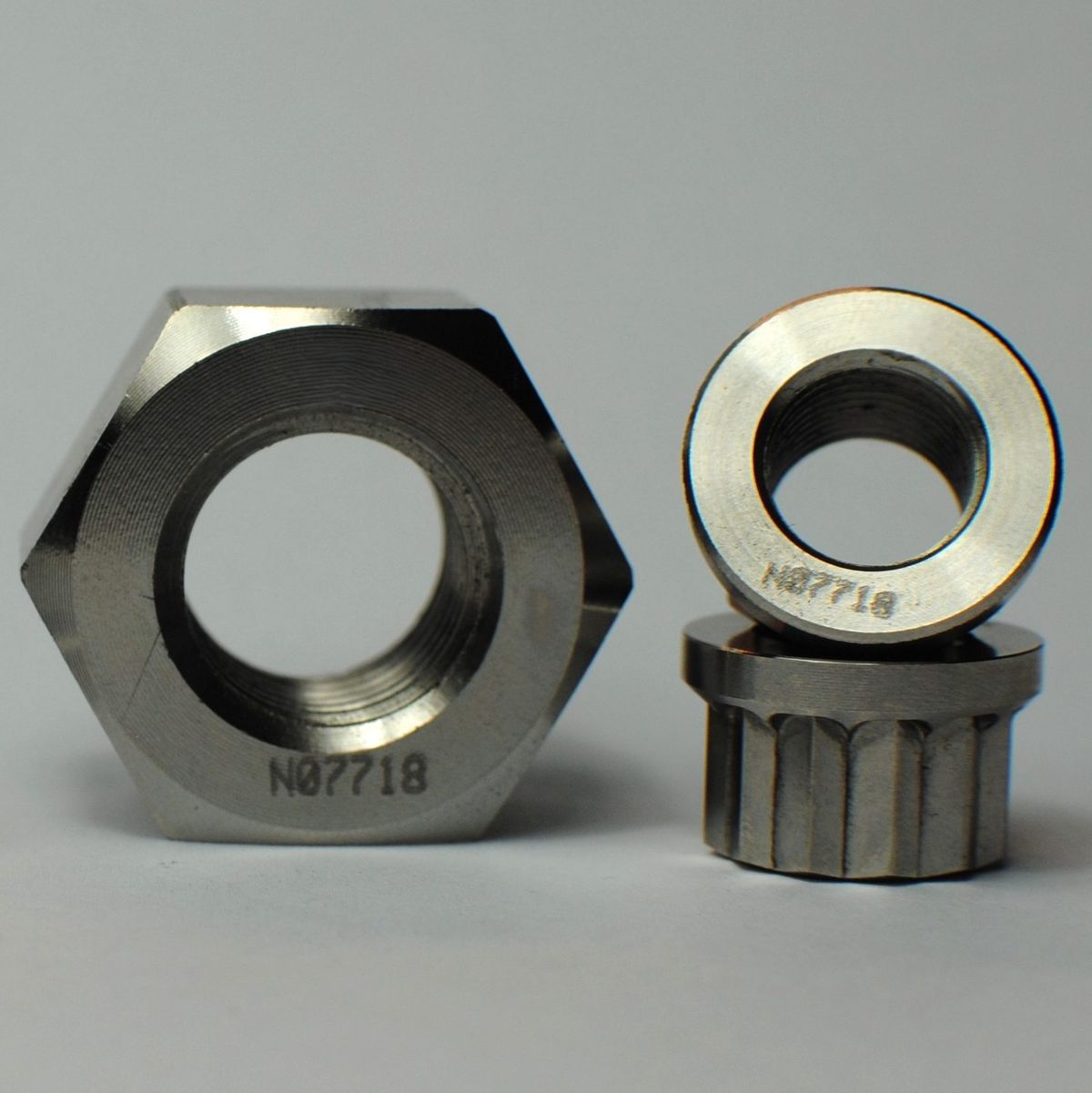
| Inconel® 718 | UNS N07718 · ASTM B637 | High strength at elevated temperature, aerospace and energy |
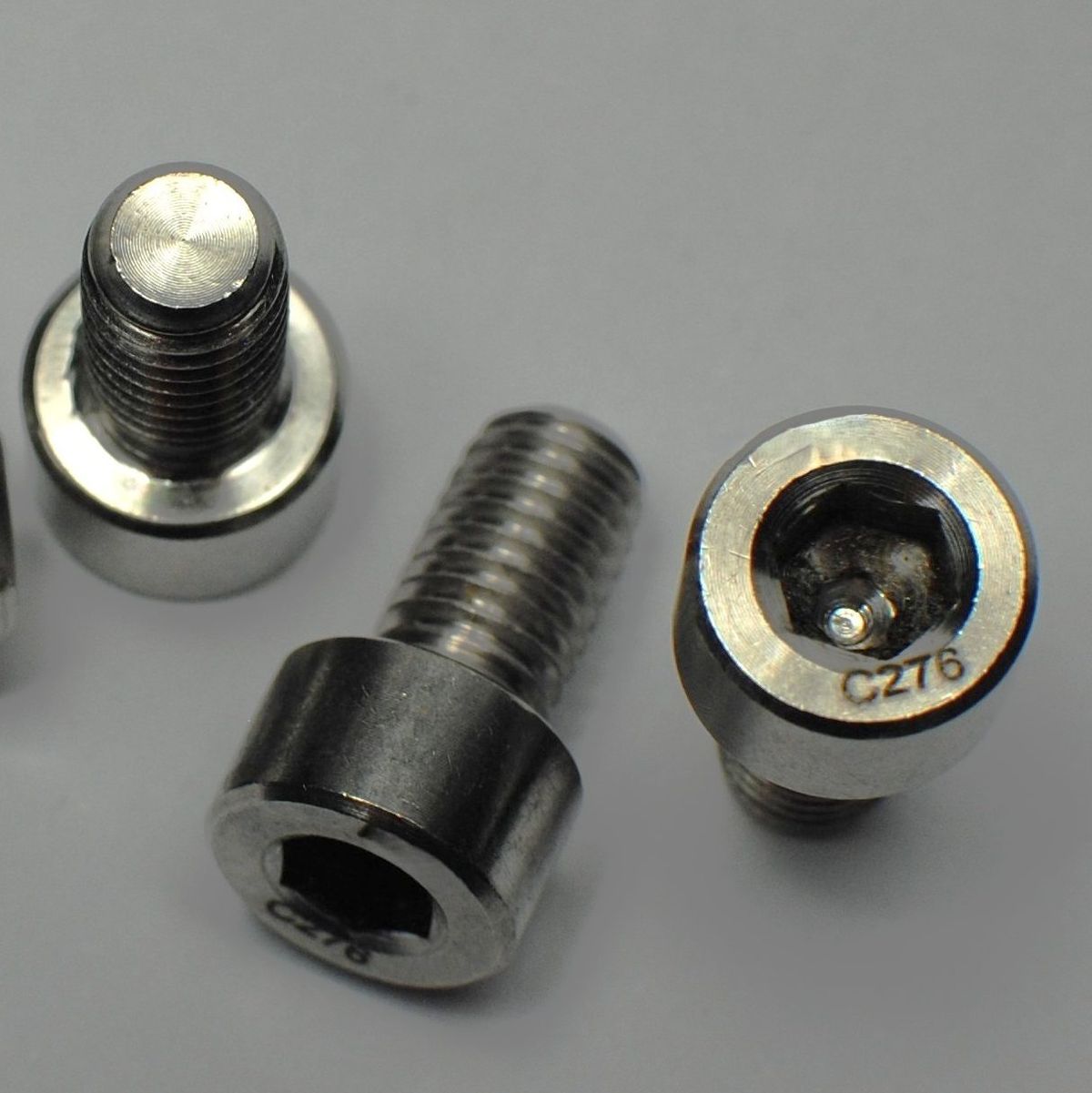
| Hastelloy® C276 | UNS N10276 | Acidic and oxidising environments, chemical industry |
| Monel® 400 | UNS N04400 | Seawater, marine |
| Monel® K500 | UNS N05500 | Seawater with high mechanical strength, oil & gas |
| Alloy 20 | UNS N08020 | Sulphuric acid, chemicals |
| Waspaloy® | — | Aerospace, high temperatures |
| Titanium | Gr. 2 (UNS R50400) · Gr. 5 · ASTM F467/F468 | Low weight and corrosion resistance, aerospace and marine |
Inconel®, Hastelloy® and Monel®: which to choose
Nickel-, cobalt- or iron-based superalloys keep their mechanical properties even above 1000 °C, while chromium, molybdenum and aluminium form surface oxide layers that protect them from corrosion.
Inconel®
A nickel-chromium alloy for service above 1000 °C: aero engines and turbines, heat exchangers and boilers, chemicals and petrochemicals. Inconel® 600, 625 and 718.
Hastelloy®
A nickel-molybdenum-chromium alloy that resists strong acids and chlorides: chemicals and pharmaceuticals, heat exchangers and condensers, desalination. Hastelloy® C22 and C276.
Monel®
An alloy of nickel (63–70%) and copper (20–29%): marine (shafts, propellers, heat exchangers), chemicals and petrochemicals, food. Monel® 400 and K500.
Screws, stud bolts and bolts in the alloy you need
Alloy steels, stainless steel, duplex and super duplex
High and low temperature
ASTM A193 B7, B7M, B16 · A320 L7, L7M, L43 · A194 2H, 2HM, 4, 7, 7M · EN 10269 1.7225, 1.7218, 1.7709, 1.1191 · 39NiCrMo3.
Duplex and super duplex
F51 (UNS S31803, 1.4462) · F53 (UNS S32750, 1.4410) · F55 (UNS S32760, 1.4501). Corrosion and fatigue resistance for marine and offshore use.
For high temperatures
ASTM A453 Gr. 660 classes A, B, C, D (A286) · EN 1.4980 · ASTM A437 B4B, for turbines and power generation.
Austenitic stainless steels
AISI 304/304L, 316 · ISO 3506 A2, A4 classes 50, 70, 80 · ASTM A193 B8, B8M cl. 1 and 2, B8A, B8MA, B8T, B8R · XM19 · Nitronic 50 (UNS S20910).
Martensitic and PH
AISI 410 (X12Cr13), AISI 420 (X30Cr13), 17-4 PH (UNS S17400).
Carbon steel, copper and aluminium
ISO 898-1 4.8–12.9 · S235, S275, S355 · C67, C72 · brass OT58 and OT63 · aluminium alloys.
Stainless steel screws, bolts and stud bolts in AISI 304 and 316
Stainless steels are steels with at least 11% chromium, the element that gives the material its high corrosion resistance. They fall into three families: austenitic, ferritic and martensitic.
For screws, bolts and stud bolts, standard and to drawing, we use 300-series austenitic stainless steels: depending on the application, AISI 304 or AISI 316, that is, the A2 and A4 groups of ISO 3506.
In most cases AISI 316 offers better corrosion resistance. For some substances, however, such as nitric acid, 304 resists better than 316.
Stainless steel in stock and to drawing: screws, nuts and washers, B8 and B8M stud bolts.
AISI 304: equivalent designations
| System | Designation |
|---|---|
| ASTM | 304 |
| EN | 1.4301 |
| UNS | S30400 |
| JIS | SUS 304 |
| Country | Standard |
|---|---|
| Europe | EN 10088-3:2005 |
| Italy | UNI 6900 |
| Germany | DIN 17440-85 |
| France | NF A 35-574-90 |
| United Kingdom | BS 970 pt.3-91 |
| USA | AISI/SAE |
AISI 304: chemical composition (%)
| C max | Mn max | Si max | Cr | Ni | P max | S |
|---|---|---|---|---|---|---|
| 0.07 | 2.0 | 1.0 | 17.0–19.0 | 8.0–10.5 | 0.045 | 0.03 |
What are exotic materials for fasteners?
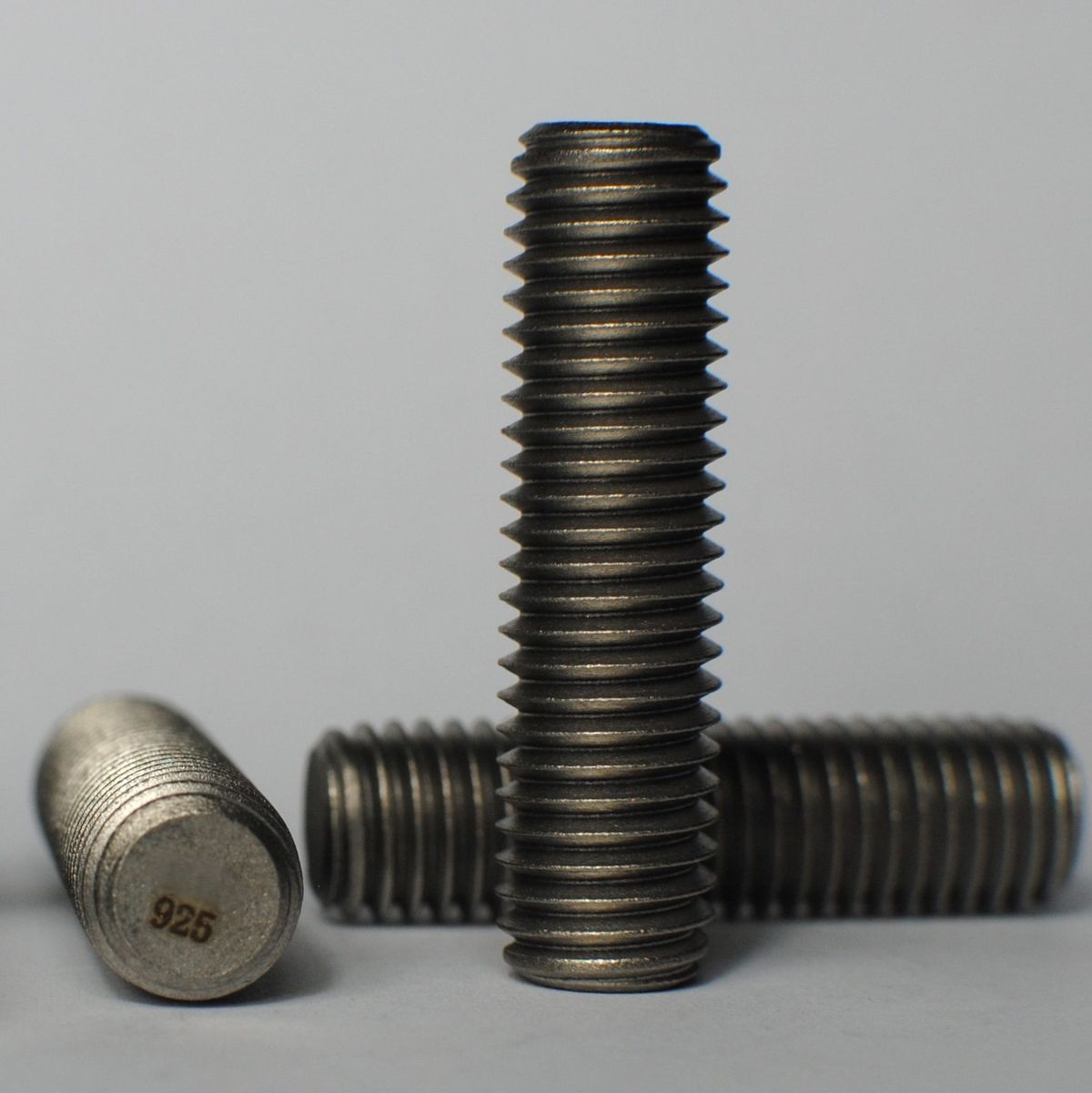
They are the nickel-, titanium- and cobalt-based alloys used where common steels cannot cope: Inconel® 625 and 718, Hastelloy® C276, Monel® 400 and K500, Alloy 20, Waspaloy®, titanium grades 2 and 5. We supply them as stud bolts, bolts, nuts and screws, including to drawing.
Which special steels do you use for stud bolts and bolts?
We use ASTM A193 B7, B7M and B16, ASTM A320 L7, L7M and L43, 42CrMo4, 39NiCrMo3, 21CrMoV5-7, A453 Gr. 660 (A286), A437 B4B, austenitic and martensitic stainless steels, 17-4 PH, Nitronic 50, duplex F51 and super duplex F53 and F55.
Is AISI 316 stainless steel always more resistant than AISI 304?
In most cases, yes: AISI 316 offers better corrosion resistance. For some substances, however, such as nitric acid, 304 resists better than 316.
What is the difference between A2 and A4 stainless steel?
Under ISO 3506, A2 is the AISI 304 group and A4 the AISI 316 group: both are 300-series austenitic stainless steels. We supply screws, bolts, nuts and stud bolts in A2 and A4, from stock and to drawing.